
No People Excel Them
David G. Burnet on the Comanches and Other Tribes of Texas in 1847

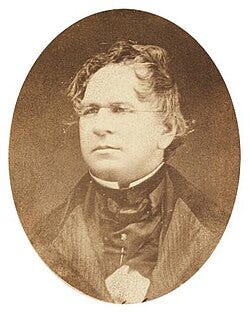
Henry Rowe Schoolcraft, who lived seventy-one years between 1793 and 1864, is one of many interesting people from that time period that are largely forgotten. He possessed a brilliant, inquisitive mind and was a wildly prolific writer. Best known as an American geographer, geologist, and ethnologist, he was also an explorer, Indian agent, and poet.
During the years David Burnet was with the Comanches in 1818 and 1819, Schoolcraft was conducting a mineralogical and geological survey of the Ozarks. This brought him into contact with Moses Austin and his lead mining operation in Missouri. His 1819 report and later writings provide a valuable view of both Moses and Stephen Austin’s lives and activities. He next explored Lake Superior and the upper Mississippi river valley with Lewis Cass in 1820. From 1822 to 1841, Schoolcraft served as the United States Indian Agent at Sault Ste. Marie, Michigan. During these years he also led an 1832 expedition to locate the true headwaters of the Mississippi River.
I can already envision many of you scratching your heads and checking the title of this article.
“Hold on,” you are saying, “what does all of this have to do with David G. Burnet and the Comanches?”
That’s a fair question and the answer is, “It has quite a bit to do with both of them, along with how the United States developed its policy not only for dealing with the Comanches, but with all of the indigenous peoples of the country’s territory. I only require a moment of patience and all will become clear.”
Following the annexation of Texas and the Mexican War, the United States found itself in possession of an empire stretching from the Atlantic to the Pacific. The lands offered a wealth of natural beauty to soothe the soul and inspire the artist along with a treasure trove of natural resources to fuel the economic growth of the growing country. It was also the home to many thousands of Native Americans that had long called the land their home along with many others that had been pushed westward by the “Manifest Destiny” of the land hungry citizens of the United States.
On March 3, 1847, before the Mexican-American War was even over, the United States Congress passed an act calling for the gathering of information about the native peoples of these lands. Knowledge, it is said, is power, and by gathering as much knowledge as possible about the diverse original inhabitants of the United States, it was hoped that the government might gain enough power of understanding regarding how to deal with them all. Henry Schoolcraft, with his brilliant mind, great communication skills, and keen interest in the lives of American Indians, was the man that the Office of Indian Affairs in the Department of the Interior turned to to manage this project. He was officially assigned “to collect and digest such statistics and materials as may illustrate the history, present condition and future prospects of the Indian tribes of the United States.” Schoolcraft energetically set about his task and between 1851 and 1857 he published six massive volumes of statistics and detailed descriptions on the Native Americans.
Schoolcraft offered a very interesting and revealing passage in March 1847 when he began working of the project bluntly titled Historical and statistical information, respecting the history, condition and prospects of the Indian tribes of the United States. He wrote:
“It could not have been anticipated in the beginning of the 16th century, that erratic and predatory hordes of hunters, without agriculture, arts, or letters, and with absolutely nothing in their civil polity that merits the name of government, should have been able to sustain themselves: far less, to cope with the European stocks who landed here with the highest type of industrial civilization.
But justice to every period of our history, colonial and sovereign, requires it to be shown that the great duties of humanity have not been constantly performed towards them; that their possessory right to the soil has not been at all times fully acknowledged, and that their capacities for improvement and knowledge have not been attempted to be elicited in every way, and unceasingly cultivated and appealed to.
A continent has been appropriated, in the occupancy of which this race preceded us. For their actual character in peace and war, and capacities for the duties of life; for their history and idiosyncracies; for their arts and habits; their modes of subsistence, and inter-tribal intercourse; for their languages and mental traits and peculiarities, as developed by curious oral recitals and mythologic dogmas and opinions, which carry the mind back to early oriental epochs; for their system of mnemonic symbols, and, in fine, for the general facts that go to establish their nationality and character, posterity will look to the present age for its record, whatever may betide the history of the tribes, or the efforts of humanity in their behalf.”
When it came time to assess the native peoples of Texas, Schoolcraft wisely reached out to two people who possessed the required intimate knowledge and level of expertise in the subject—David G. Burnet and Indian Agent Robert S. Neighbors.
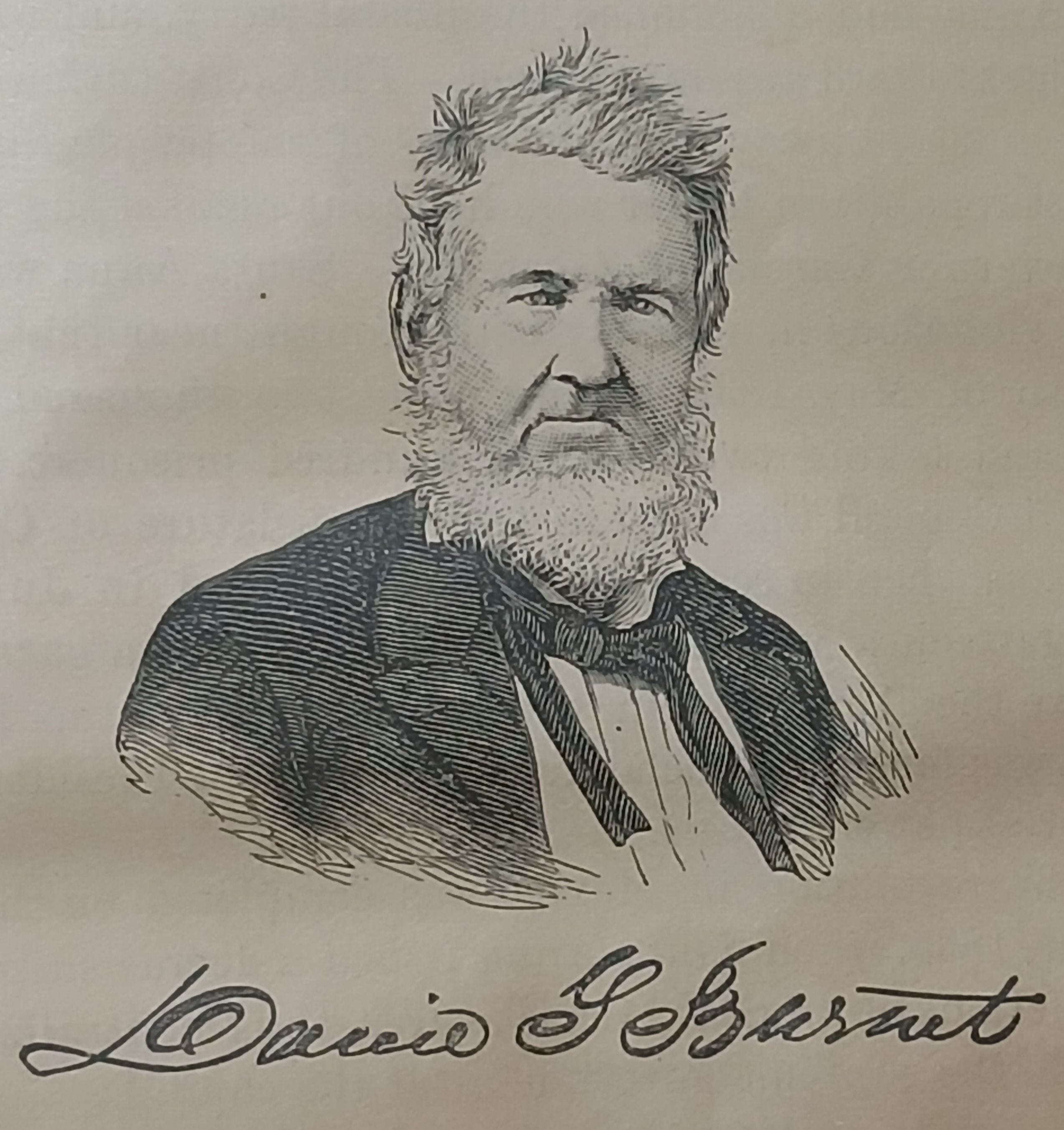
See? I told you we’d get to Texas, Burnet, and the Comanches.
We will look what Robert S. Neighbors had to say about the Comanches and the Texas Indians at a later date. Today we focus on Burnet’s thoughts and knowledge. I have made minor spelling corrections and added only a few notes in the text that are bracketed.
As a preface to Burnet’s pages, Schoolcraft included the following introduction:
“The eminent position in Texan history, of the writer of the following paper—his early migration into the area of Texas; and the opportunities of observation he has had, for a long series of years, upon the manners and customs, traits, character, and numbers of the aboriginal population of that state, give a value to it, which will not fail to be recognized. Mr. Burnet was one of the earliest Americans who migrated into that country, during the era of the Austin movement.”
Next is included a brief letter that David G. Burnet, writing from Austin, Texas on on September 29, 1847, when he had finished working on his assignment:
“Major Neighbors, the special Indian Agent for Texas, some time ago presented me a pamphlet containing many queries in relation to Indians, their history, habits, &.;[1] and requested I would furnish something concerning the Comanches, among whom he knew I had been.
Always willing to contribute any thing in my power to the general mass of intelligence, on a subject of such intrinsic interest, I have prepared a paper of some length, —it may be of some little value,—relating to the Indians of Texas, but principally to the Comanches, our most considerable tribe. In the continued absence of Major Neighbors, I take the liberty to transmit it to you. If it will add any thing worth being contributed to the amount of information sought to be collected, I shall be fully compensated for the trouble of preparing it.
The subject touched on in the two last paragraphs, though somewhat extraneous, is one of present interest to the General Government, and to this new State.
Very respectfully, Your obedient Servant,
David G. Burnet.”
Burnet’s essay bears the date of August 20, 1847. This is presumably the date that he began the task, which I now present to you for the enhancement of your knowledge and edifiction. The following lines, penned by Burnet almost thirty years after his following letters, are filled with interesting insights and references to events in the interim period. It is important to keep in mind, however, that Burnet was not perfect and there will be inaccuracies regarding Comanche life and culture that are wrong. Please feel free to write in and assist me in the annotation of his writings if you find any glaring inacuracies that he stated as fact. I will be doing so myself in the future. Aside from all of that, this is a valuable historical document and acts as a snapshot of Comanche culture by an outsider in 1847.
THE COMANCHES AND OTHER TRIBES OF TEXAS;
AND THE POLICY TO BE PURSUED RESPECTING THEM
BY EX-PRESIDENT DAVID G. BURNET
August 20th, 1847.
Sir:
During the years 1818-19, I spent a considerable time with, or in the vicinity of, the Comanche Indians of Texas. My purpose was the renovation of an impaired constitution, seriously threatened with pulmonary consumption, in which I succeeded beyond my utmost expectations.
This residence in the Indian country, enabled me to collect some facts in relation to the Comanches, and some minor tribes of Texas, which may possibly be worthy of being communicated to the Department of Indian Affairs, in reply to the very voluminous inquiries concerning the aborigines of the United States, lately promulgated by the Chief of the Department, a copy of which you have furnished me. My information is entirely too limited and imperfect, for me to attempt a specific answer to the several queries propounded. The want of an adequate interpreter would alone have precluded me from acquiring the minute statistical and other information necessary to that end, had my mind been specially directed to such an object. It shall therefore condense the remarks I have to make, and which, in the absence of all memoranda, I must draw from a recollection of near thirty years.
The Comanches are the most numerous tribe of Indians in Texas. They are divided into three principal bands; to wit, the Comanche, the Yamparack, and the Tenawa. The former, with whom we have most intercourse, from their geographical position, occupy the region between the Rivers Colorado of Texas and the Red River of Louisiana; ranging from the sources of the Colorado, including its western affluents, down to the Llano Bayou; and from the vicinity of the Pawnees, on the Red River, to the American settlements on that stream. They are frequently at war with the Pawnees, and sometimes make a hostile incursion upon the Osages. The Yamparacks range the country north and west of the Comanches; and the Tenawas again interior from the latter. They are essentially one people: speak the same language, and have the same peculiar habits, and the same tribal interests.
In 1819 the three bands consisted of 10,000 to 12,000 souls, and could muster from 2000 to 2500 warriors. They have been generally estimated at much higher numbers, but I am persuaded the above would comprise their entire population and their utmost military force. Since the period above named, I presume they have rather diminished than increased in numbers, as they are generally engaged in depredating upon the proximate Mexican settlements, by which they often suffer loss of life; are also occasionally at war with other tribes; and have within a few years sustained some abatement of numbers in their forays upon our settlements.
The Comanches have no definite idea of their own origin. Their loose tradition is, that their ancestors came from the North; but they have no precise conception of the time when, or from what particular region. They are nomadic in their manner of life; their cattle consisting of horses and mules, which they rob, for the most part, from the imbecile Mexicans, who hold them in great dread. They have no knowledge of agriculture, but depend entirely on game for subsistence, and chiefly on the buffalo, which descend in large herds to their region on the approach of winter. During the summer months, when the buffalo return to their northern pastures, these Indians are often exposed to suffering, and find it difficult to procure adequate sustenance; but they have a rare capacity for enduring hunger, and manifest great patience under its infliction. After long abstinence they eat voraciously, and without apparent inconvenience.
I do not believe the Comanches, —by which term I intend the entire tribe, — have any traditions of the slightest verisimilitude, running farther into bygone time than the third generation. Their means of knowledge of the past are altogether oral; unaided by monuments of any description. I could never discover that they had any songs, legends, or other mementoes, to perpetuate the fétes of arms, or other illustrious deeds of their progenitors; and I question if the names of any of their chiefs of the fourth generation ascending are retained among them. They perish with but little more note of remembrance than does a favorite dog among the enlightened of the people. In 1819 their principal chief, who was generally recognized as the head of the three bands, was called Purrow-kifty [Paruakevitsi in modern texts]; by interpretation, Little Bear. He was a Tenawa, and was a brave, enterprising, and intelligent savage; superior to his tribe in general. He was celebrated for his taciturnity and sedateness; it was said of him, that he never laughed, except in battle. His habitual taciturnity was not of that affected kind which is sometimes adopted among the more enlightened, as a convenient substitute for, and type of, wisdom.
The authority of their chiefs is rather nominal than positive; more advisory than compulsive; and relies more upon personal influence than investment of office. They have a number, altogether indefinite, of minor chiefs or captains, who lead their small predatory bands, and are selected for their known or pretended prowess in war. Any one who finds and avails himself of an opportunity for distinction in robbing horses or scalps, may aspire to the honors of chieftaincy, and is gradually inducted by ¢ tacit popular consent, no such thing as a formal election being known among them. They usually roam in small subdivisions, varying according to caprice, or the scarcity or abundance of game, from twenty to one hundred families, more or less; and to each of these parties there will be one or more captains or head men. If any internal social difficulty occurs, it is adjusted, if adjusted at all, by a council of the chiefs present, aided by the seniors of the lodges, whose arbitrement is usually, though not always, conclusive between the parties at variance: but there are not many private wrongs perpetrated among them, and family or personal feuds seldom arise —they live together in a degree of social harmony which contrasts strikingly with the domestic incidents of some pseudo-civilized communities, that vaunt of their enlightenment.
They have no idea of jurisprudence as a practical science, and no organized and authoritative system of national polity. One captain will lead his willing followers to robbery and carnage, while another, and perhaps the big chief of all, will eschew the foray, and profess friendship for the victims of the assault. Hence treaties made with these untutored savages are a mere nullity, unless enforced by a sense of fear pervading the whole tribe: and it is somewhat difficult to impress this sentiment upon them; for they have a cherished conceit, the joint product of ignorance and vanity, that they are the most powerful of nations.
They recognize no distinct rights of meum and teum, except to personal property; holding the territory they occupy, and the game that departures upon it, as common to all the tribe: the latter is appropriated only by capture. They are usually very liberal in the distribution of their provisions, especially in a time of scarcity, Their horses and mules are kept with sufficient caution, in separate cavalcades or hordes. Industrious and enterprising individuals will sometimes own from one to three hundred head of mules and horses, the spoils of war. These constitute their principal articles of traffic, which they exchange for the goods their convenience or fancy may require. They sell some buffalo robes, which are dressed, and sometimes painted, by the women with considerable taste. Prisoners of war belong to the captors, and may be sold or released at their will. While among them, I purchased four Mexican prisoners, for each of whom I paid, on an average, about the value of 200 dollars, in various articles, estimated at their market value. One of them very soon stole a horse and ran away; two were worthless idlers; and one old man rendered some remuneration by personal services.
These three cognate tribes cannot be said to have any common tribal government. The Tenawa and Yamparacks trade with the Mexicans of Santa Fé, while the lower party war upon the Mexicans of Chihuahua, and all the lower provinces, including Tamaulipas. Still, hostilities by the United States with the one, would involve a conflict with all; for the Comanches, the lower party, if pressed. would retire to, and coalesce with, their kindred, who would adopt the quarrel without an inquiry into its justice or expediency. But, ordinarily, there is no political intercommunion between them, although they sometimes cohabit and pursue the buffalo in the same range. The two upper parties have comparatively few mules or horses, being less convenient to those portions of Mexico where these animals most abound; the regions of the mid and lower Rio Grande. They have no established “game laws,” but they regard the ingress of stranger hunters with a jealousy that is sometimes fatal to the intruders, This seldom occurs, unless the destruction can be consummated with impunity. As before remarked, their trade consists principally in the exchange of horses and mules, for the usual articles of Indian commerce. They are sufficiently astute in dealing, although quite ignorant of the real value of many articles they purchase, and are liable to be egregiously imposed upon. A prompt delivery on both parts, is the best mode to secure payment. When goods are delivered to them on credit, they are either gambled off, or distributed by donations to friends, in a few days, and then the improvident debtor “loves his horses,” and pays them with reluctance if at all. The obstinate refusal to pay, is difficult to overcome — though I have known the chief of the council to compel payment—but the combined influence of several of their most powerful chiefs was necessary to effect. it.
The Comanches take no furs, and but few deerskins, the most of which they consume at home. There are very few beavers or otters in their country, and they know nothing of the art of trapping. The American trappers have nearly extirpated these valuable animals from the waters of Texas. They have no idea of the value of money as a medium of exchange. I have often seen dollars and their several integrants, suspended in a continuous line, terminating in picayune, to the hair of a Comanche dandy, elongated by horse-hair or a cow’s tail.
The Comanches compute numbers by the fingers—the digits, by single fingers extended —decimals by both hands spread out—and the duplication of decimals, by slapping both hands together to the number required—I do not know the names of their digits, except the unit, semus; nor to what extent they carry these generic denominations; but doubt if they have any term for a higher number than twenty — after that, they resort to the names of the several digits for the multiplication of the decimal number. They keep no accounts in hieroglyphics, or devices of any kind, but rely entirely upon memory; their commercial transactions being few and simple.
They have made but small advances in the science of medicine, and have no determinate knowledge of the pathology of diseases. The country they inhabit is remarkably salubrious, and I noticed among them several instances. of apparently great longevity, accompanied with a notable retention of the mental and physical faculties. There are no marshes, swamps, or stagnant water-pools, to send forth miasmatic exhalations, engendering “the pestilence that walketh in darkness.” I believe they have a very potent and efficacious, if not a sovereign, vegetable remedy for the bite of venomous reptiles, unless a principal artery is punctured. They are expert in curing gun-shot wounds, and in the treatment of fractured limbs, which they bandage with neatness and good effect. They have no knowledge of the art of amputation, and if gangrene supervenes in any case it is remediless, They believe in divers amulets and other mystic influences; and have a custom of “singing for the sick.” when a crowd assembles at the lodge of the sick person and makes all sorts of hideous noises, vocal and instrumental, the object of which is to scare away the disease;—it is certainly better calculated to affright than to soothe. I did not inquire, with any minuteness, into their materia medica, believing that Comanche specifies were more likely to be efficacious among themselves than with others: their diet and all their habits are simple, and they are strangers: to strong drink, or “fire-water,” as they significantly call alcoholic liquors physicians, and have not much use for any, for there are few diseases prevalent among them. Fevers sometimes occur, but are not understood either in their pathology or manner of cure : they are generally intermittent, and of a very mild type, owing partly to the avid purity of their atmosphere, They have no professed practitioners in obstetrics. A woman will accomplish her parturition without aid, and sometimes on a journey, without losing an entire day’s march. The small pox was introduced among them the second year previous to my visit, and swept off a great number. It prevailed but a short time or the nation would have become extinct, for I believe very few who imbibed the virus survived its ravages. Their mode of treatment was calculated to increase the mortality. The patients were strictly confined to their lodges, excluded from the air, and almost suffocated with heat. In many instances while under the maddening influence of the disease, exasperated by a severe paroxysm of symptomatic fever, they would rush to the water and plunge beneath it. The remedy was invariably fatal.
The Comanche costume is simple, though often variegated: it consists generally of a buffalo robe, worn loosely around the person, and covering the whole to the ancles. This is sometimes painted, or ornamented with beads on the skin side, or both. ‘They prefer a large mantle of scarlet or blue cloth, or one half of each color, except in very cold weather, when the robe, the hair turned in, is more comfortable. The breechcloth is usually of blue stroud, and descends to the knees. The leggings, made long, of dressed deer-skin, or blue or scarlet cloth, garnished with a profusion of beads and other gewgaws. The head-dress is as various as their fancies can suggest, and their means supply. Purrow-a-kifty’s parade head-dress was a cap made of the scalp of a buffalo bull, with the horns attached in’ proper position, They ordinarily wore few ornaments, The young men, the exquisites of the tribe.—and no people, savage or civilized, are more addicted to the fanciful in dress,—bedaub their faces with paints of divers kinds and colors—red, black, and white predominant —these they obtain, for the most part, from the different fossils of their country, without chemical elaboration. Vermilion is much admired, but is generally too costly for habitual use. They sometimes load their heads with feathers, arranged in lofty plumes, or dangling in the air in pensile confusion, or wove into an immense hood. The hair is often besmeared with a dusky-reddish clay; and horse-hair, cow-tails, or any other analogous material, is attached to the conglomerate mass, until the huge compound cue will descend to the heels of the wearer. They wear arm-bands, from one to ten or more on each arm, made of brass wire, about the size of a goose-quill; nose-pieces, of shell, or bone, or silver, attached to the division-cartilage ; and ear-pendants, of strung-beads or any thing they fancy and can procure. They know nothing of the origin of these customs of the costume, and understand as little of any sensible reason for them, as the more civilized dandy does, of the rationale of his changeful fancies of the toilet, which are sometimes equally as ridiculous and diverse from the simplicity and the symmetry of nature. Their actual war-dress approaches to absolute nudity, When about to attack an enemy, which they always do on horseback, they disrobe themselves of every thing but the breech-cloth and moccasins, Their saddles are light, with high pommels and cantlins [cantles]; and they never encumber their horses with useless trappings.
The women are held in small estimation; they are “hewers of wood and drawers of water” to their indolent and supercilious lords, But this is common to all people, on whom the oracles of truth have never shed their humanizing influence. The women, married and single, pay much less attention to personal adornment than the men, and appear, in the degradation of their social condition, to have retained but little self-respect. They are disgustingly filthy in their persons, and seemingly as debased in their moral as in their physical constitution, They are decidedly more ferocious and cruel to prisoners than the men, among whom I have sometimes witnessed a gleaming of a kind and benevolent nature. It is an ancient custom to surrender a prisoner to the women, for torture, for the first three days of his arrival among them. These fiends stake out the unhappy victim by day, that is, fasten him on his back to the ground, with his limbs distended by cords and stakes. At evening, he is released and taken to the dance, where he is placed in the center of a living circle, formed by the dense mass of his tormentors, and made to dance and sing, while the furies of the inner line beat him with sticks and thongs of raw-hide, with great diligence and glee, until their own exertions induce fatigue; when he is remanded to his ground-prison, to abide a series of small vexations during the coming day, and a repetition of the fell orgies the ensuing night. At the expiration of the three days, he is released from their custody, exempt from further annoyance, and taken to the lodge of his captor, to enter upon his servitude, This course is not universal. Adult prisoners are sometimes deliberately put to death with protracted tortures, when the party taking them have suffered much loss of life in the foray. At such times, these savages will cat a portion of the flesh of their victims; and so far are liable to the charge of being cannibals. But they eat to gratify a spirit of revenge, and not to satiate a morbid and loathsome appetite. Cannibalism, disgusting in all its phases, is with them a purely metaphysical passion. It is perhaps more abhorrent, to a correct moral sense, though less loathsome than that which results from mere brutal appetite. When boys or girls are captured, they are not subject to any systematic punishment, but are immediately domiciliated in the family of the captor. If docile and tractable, they are seldom treated with excessive cruelty, They are employed in menial services, and, occasionally, in process of time, are emancipated and marry into the tribe, when they become, de facto, Comanches. There were a number of Mexican juvenile prisoners among them. Those I saw were reluctant to being redeemed, and a much higher value was set on them than on adults.
Polygamy, to an indefinite extent, is permitted. One chief, Carno-san-tua, the son of America, a name I presume of Mexican bestowment, had ten wives, all of whom seemed to live together in uninterrupted harmony, although one of them was evidently the chief favorite. Wives are divorced unceremoniously by the husbands, and) sometimes marry again. Infidelity, on the part of the wife, is punished by cutting off the nose; the excision is made from the lower extremity of the cartilage, diagonally to the lip. I saw several instances of this revolting retribution. The women do all the menial work. They often accompany their husbands in hunting. He kills the game, they butcher and transport the meat, dress the skins, &c. One or more women will sometimes accompany a war-party, when they act as hostlers and serviteurs generally. When in the enemy’s country, and near the scene of intended assault, the party selects some sequestered spot, in a dense thicket or chapparal, if to be had, where they encamp, deposit their feeble horses and surplus baggage, with a few of the aged or inefficient warriors, and the women, as a camp-guard, while they sally out. usually by moonlight, in quest of prey. They war for spoils, and their favorite spoils are horses and mules. They often drive off several hundreds of these from a single Mexican ranche, on one foray. The Comanches are not deficient in natural courage, and no people excel them in the art of horsemanship, and few, if any, in the use of the bow and the javelin, both of which they handle with great dexterity, on horseback. As foot-soldiers, they are comparatively of little account; but they are seldom caught on foot by an enemy, and never, except by surprise. They use light shot-guns, but have an aversion to the weight of the rifle. Experience has taught them to dread this formidable weapon, in the hands of our brave frontiersmen; and to this sentiment may be attributed much of their forbearance from hostilities, They are generally men of good stature, with very few instances of diminutive size or personal deformity. They use a shield made of raw buffalo-hide, contracted and hardened by an ingenious application to fire. It is oval or circular, about two feet in diameter, and is worn on the left arm. It will effectually arrest an arrow, but is not proof against a rifle-ball in full force.
The geographical knowledge of the Comanches is confined within the small limits of their own actual observation. All beyond is, to their benighted minds, obscure and doubtful, and an Indian’s doubt is positive, unqualified disbelief, They are excessively incredulous of any facts, in relation to other countries, that conflict with their own experience. They have no settled, intelligible notion of the form or constitution of our planet, and none of the great planetary system. They know and can discriminate the north star, and are guided by it in their nocturnal journeys. They call it karmeadtasheno; literally, not-moving star. When or how this knowledge was acquired, I did not learn, and presume it is quite unknown to themselves. They recognize the sun as the great fountain of heat, but of its nature, or the manner of its dispensation, they know nothing and care nothing. They refer to time long past, by colds and heats; that is, by winters and summers; and although they pay much attention to the phases of the moon, the revolutions of that planet are too frequent, and would soon involve too high numbers to constitute a mean of computing the chronology of events, that have transpired more than a year. For short periods, past or future, they count by moons, from full to full. The time of day they note by the apparent position of the sun in the heavens.
The Comanche notions of religion are as crude, imperfect, and limited. as of geography or astronomy. They believe in, or have some indefinite traditional idea of the Great Spirit; but I never discovered any distinct mode or semblance of worship among them. I frequently observed, early in the morning, a shield, such as they use in war, elevated at the point of a javelin, (the hilt in the ground.) and invariably facing the cast. Whether done in reverence to the great rising luminary, and of Ghebir origin, I did not ascertain, They believe in witchcraft, and sometimes attribute their ailments to the magical influence of some subtle and malignant enemy of their own species. They held the Kitchies [also spelled Kichai, Keechi, and Kitsai], a small and distinct tribe then residing on the waters of the River Trinity, in peculiar detestation, on account of their supposed powers of sorcery. They imagine that good men (and adroitness and daring in taking scalps or stealing horses are capital evidences of goodness) are translated at death to elysian hunting-grounds, where buffalo are always abundant and fat. The reverse of this maximum of Comanche felicity is assigned to the wicked. In order to facilitate the posthumous enjoyments of a deceased warrior, they sacrifice some of his best horses, and bury in his grave his favorite implements of the chase for his future use. They have no determinate idea of the locality of these imaginary hunting-grounds, They mourn for the dead systematically and periodically with great noise and vehemence; at which times the female relatives of the deceased scarify their arms and legs with sharp flints until the blood trickles from a thousand pores. The duration of these lamentations depends on the quality and estimation of the deceased; varying from three to five or seven days: after which the curtain of oblivion seems to be drawn around the grave. Whether this bloody rite of scarification has descended by tradition from the worshippers of Baal, is a question in elucidation of which they have no relic, oral or material, or other adumbration of evidence, beyond the obvious similitude of the act itself with a custom of the heathen of the antique Canaan.
I perceived no order of priesthood, or anything analogous to it, among them; if they recognize any ecclesiastical authority whatever, it resides in their chiefs; but I think their religious sentiments are entirely too loose, vague, and inoperative, to have produced any such institution. The elevation of the shield is the only act I ever noticed among them, that afforded the slightest indication of religious concernment; and I doubt if they have any opinions relative to future rewards and punishments that exercise any moral influence upon them. They have nothing like a system of mythology, and neither do they entertain any religious myths of a traditionary or settled character. That impressions of this kind may be easily made upon them, is probable; for they are addicted to superstition, and apt to believe any absurdity, natural or preternatural, that does not conflict with their personal or natural vanity. But their minds are too little intent upon the subject of a future state, ever to have formed a connected system of opinions in relation to it. If the doctrine of metempsychosis has ever been presented to them, it has not received a national or general credence: indeed, I doubt if they have any common plan of religious belief, or of a supernatural agency operating on the affairs of this life, beyond the mystic vagaries of witchcraft; and of these, they do not distinctly believe in anything beyond the potentiality of human means. It may be assumed of thein, as to all the practical results of religious sentiment, that ‘the fool hath said in his heart, there is no God.’
The country inhabited by the Comanches, at least that portion of it watered by the Colorado and its tributaries, is of a broken and varied surface — hilly, not mountainous. The valleys are generally small; some of them timbered, principally with the musquit [with the term musquit, Burnet was probably referring to Bouteloua gracilis, known commonly as Blue Gamma or Mosquito grass]; and some prairie: all of them covered with the best musquit grass, and affording the richest pasture. The soil, still in its virgin state, has the appearance of great fertility, but is, in general, too arid for successful culture, without artificial irrigation. The climate is exceedingly dry, and the protracted heats of the summer exhaust all humidity from the atmosphere, and from the soil. During the hot months the dews are light, and not very frequent. The margins of the creeks, and of the Colorado, are belted with timber of the several varieties found in similar latitudes: the live-oak and pecan are abundant; the first found in beautiful groves on the hills and level uplands. Timber suitable for building is scarce, but stone abounds. No country is better adapted to raising stock of all kinds, and especially of horses; and Estremadura cannot excel it for sheep-walks. The principal animals are the migratory buffalo, bear, deer, some antelopes, wolves of several varieties, panthers, and mustangs, or wild horses, which last are obviously of a superior quality to those found on the level or coast prairies; rabbits, of several kinds, pole-cats, and prairie-dogs are abundant : these last burrow in the ground, and live in little subterranean villages; they partake more of the qualities of the squirrel than of the canine species. Of the feathered tribe, the buzzard predominates; these serve to guide the wanderer to an Indian camp, over which they generally hover, in anticipation of a plentiful repast at the evacuation. Wild turkeys are seen in large flocks; the small birds are scarce; owls, of several kinds, are plentiful, and render the night vocal with hoots and hideous screams; the cardinal (red-bird) inhabits the thickets, but it is seldom the ear is saluted with the carols of nature’s songsters in those sequestered regions.
The country adjacent to the San Saba, a principal western tributary of the Colorado, exhibits frequent indications of minerals, particularly of iron, lead, and silver; I was shown a specimen of copper ore, found near the Brazos, high up, which was, apparently, almost pure. My informer, a Mr. Peyton Johnson, a very worthy man whom I found in the Comanche country, and who had visited the copper locality, assured me there were thousands of wagon-loads of ore, similar to the specimen, lying on the surface of the ground. There is, beyond doubt, more iron-ore in the inland regions of Texas than timber to smelt it; and enough to close hoop the globe with railroads. Stone-coal will assuredly be found in abundance, for the distribution of nature’s bounties is ordinarily too equable and provident to permit the apprehension that a country abounding in the most useful and some of the precious metals should be destitute of the means to render them available.
I never discovered or heard of any remains of ancient edifices or any tumuli, indicating the previous existence of a more enlightened race of men, in the Comanche country. Flints neatly formed into arrow-heads, are frequently found throughout Texas; some under ground, and some above—they are wrought into good shape and various sizes. The manner of their cleavage I do not know. The Indians now use iron points to their arrows; but the use of the bow and arrow is gradually diminishing, and giving way to that of fire-arms.
The Lipans are a tribe of considerable importance, and may be ranked next to the Comanches among the Indians of Texas. They have affinity with the Seraticks [Chariticas or “Dog Eaters,” a term used by the Comanches and Shoshones for some Athapaskans and Arapahos[1]] and the Muscalaroes [Mescalaro Apaches or Naa’dahéńdé, a southern Athabaskan people]; and if estimated as identical with them, are very superior to the Comanches in numbers. They have never made war upon our frontier; and their present equivocal condition is to be regretted. They are more enterprising and warlike than the Comanches, who regard them with a respect. in which fear is a chief ingredient. Their habits are very similar to the Comanches in some respects; but they have made somewhat more progress towards civilization. Many of them speak the Spanish language, having formerly had much intercourse with the Mexicans. They can now raise about 200 warriors of their own band. The Seraticks live on the Rio Grande, above the Passo del Norte. Very little is known among us, in relation to them. The Muscalaroes inhabit the river Puerco, a considerable eastern affluent of the Rio Grande:—from the best information I have, they number 1000 to 1500 warriors —are of dark complexion—peaceable in their habits—cultivate the ground and raise stock —have many horses and mules—also sheep, goats, and black cattle.
The Tonkawas are a separate tribe, having no traceable affinity to any other band of Indians in the country. They are erratic—live on game, and are quite indolent —and often in extremity of suffering. They have generally been friendly to the whites, though often suspected of having stolen horses from the frontier, A few of these accompanied our small army in the campaign against the Cherokees in 1839, and rendered good service. There are about 150 warriors of this tribe—they have usually warred within the limits of our settlements.
The Whacoes [Waco] —Tawacanies [Tawakoni]—Tow-e-ash — Aynies [Hasinai]— San Pedro’s — Nabaduchoes [Nabedache] — Nacado-cheets [Nacogdoches], and Kitchies[2] [Kichais], are small tribes or fragments of tribes, and, separately considered, are quite insignificant. They have been long resident in Texas, and properly belong to it—but they are, originally, the Kitchies excepted, of the Caddo stock, being offsets from that family. The Whacoes are the most considerable of these bands, amounting probably to 150 warriors, it being understood among Indians that every adult male is a warrior. They are a stealthy, thieving, faithless race, and have done much mischief, first and last, on our frontier. They live in a village on the Upper Brazos, and raise corn, beans, pumpkins, &e., and usually spend the winter months in hunting. The other small parties, amounting to about fifty families each, live in villages, on the waters of the Trinity and Neches, and cultivate the ground to a small extent.
The Kitchies, once a distinct and isolated tribe, have so intermarried with their neighbor bands, that they have lost their identity, and may be considered as merged into the common stock. The Caddoes formerly resided on the Red River of Louisiana, above Natchitoches and below the Great Raft, and were included in the jurisdiction of the Indian Agency stationed in ISL) at Natchitoches. They removed to Texas a few years ago, and now claim to be Texas Indians.
The Caddoes, Cherokees, Shawnees, Delawares, Kickapoos, and some others, parts of tribes, who have been allured into Texas by the amenity of its climate, the abundance of its game, and its comparatively waste condition, are altogether intruders here; and had no right of habitation, until the late government of Texas, with great folly and indiscretion, entered into a treaty with several of them in 1844. By this unwise act, which would have proven vastly more mischievous if the country had remained in separate independence than it now can do, those bands acquired a sanction to their intrusion and a right of settlement, irrespective of numbers; and their numbers would in all probability have been alarmingly increased by immigration from the northern tribes of the United States. Annexation has arrested this evil, and saved Texas from a dangerous influx of the most dissatisfied, loose, and savage of the several tribes from which the first intruders proceeded. And still it is believed they are constantly accumulating; and they are now thrown, by a silly and improvident policy of the government of the late Republic, upon the State of Texas and her territory. That they are tenants without title, and hold only at the will of the government, does not divest them of a recognized right of residence, to which they naturally attach a right of soil. Their peaceable removal, which the tranquility of the State will soon require, is practicable only by the Federal Government.
Although the subject is not comprised in the queries propounded by the department, Twill suggest that the future peace and happiness of the large inland frontier of Texas requires an early intervention of the General Government, to adjust our complex Indian relations. It is quite impossible for the State, acting within her limited sovereignty, to control and peaceably dispose of the various tribes resident within her territorial limits. The entire subjugation of the Comanches in’ particular, and probably of other tribes. or their early removal, will be inevitable. The spread of our population will, in a very few years, so crowd upon the Comanches’ ancient hunting grounds, as to compel them either to recede westward or to resist by arms a progression Which is perfectly irresistible to their feeble powers. The result of such an issue must be, their entire and absolute extermination; which, by the way, will not be effected without much disaster and bloodshed on our part. The Federal government alone is competent to prevent a catastrophe, which, however oppressive to the ancient occupants, is necessarily consequent to the progress of civilization. The State has not the means to extinguish the Indian titles to the spacious territory over which they roam in pursuit of the only means of subsistence they know, and which they claim by the emphatic right of occupancy for “time immemorial” for them. She cannot provide them another and more secure, because remote, country for their future habitation. Such country can be found only in the region of the Rocky Mountains, beyond the local jurisdiction of the States, and is disposable only by the Federal government.
To effect this humane policy,—the only practical substitute for the actual extermination of the Indians,—it is indispensable that the Federal government should become the proprietor of the vacant domain of Texas which comprehends the territory over which these erratic people wander in quest of game. To reclaim the Comanches from the chase, and adapt and reconcile them to the less attractive labors of agriculture, if it be not utterly impracticable, would require many years of experimental tuition, to the very initiative of which they are habitually averse, and which they never would consent to receive from the insulated and defective authority of the State. The general government only can manage this delicate subject, of so deep, abiding, and growing interest, happily for all parties, and without great blood-guiltiness to some of them.
Your Obedient Servant,
David G. Burnet.
With President Burnet’s closing words, this post ends. I apologize for the delay in sharing this but between cutting and baling hay across the county and focusing on family it has been difficult to get time to sit down and type these words out. This problem arises every summer. The work continues in every spare second that I get to research and write on a growing mountain of topics and projects related to Texas, the Southwest, and beyond.
Thank you to everyone that subscribes and reads and I want to offer a very special thanks to the wonderful people who have considered this work worthy of supporting by becoming paid subscribers. I am laboring hard to create some very special writings on Texas history that will make your support justified. Big things are on the way.
[1] Thurman, Melburn D. “ON THE IDENTITY OF THE CHARITICAS [SARƗƗ RƗKKA]: DOG EATING AND PRE-HORSE ADAPTATION ON THE HIGH PLAINS.” Plains Anthropologist, vol. 33, no. 120, 1988, pp. 159–70. JSTOR, http://www.jstor.org/stable/25668753. Accessed 31 July 2026.
[2] The original text here switched from Kitchies to Hitchies. I have made the spelling uniform throughout. Please contact me if there is indeed a Hitchies population group.
[1] Vide “ Inquiries,’ issued by the War Department in 1847.